
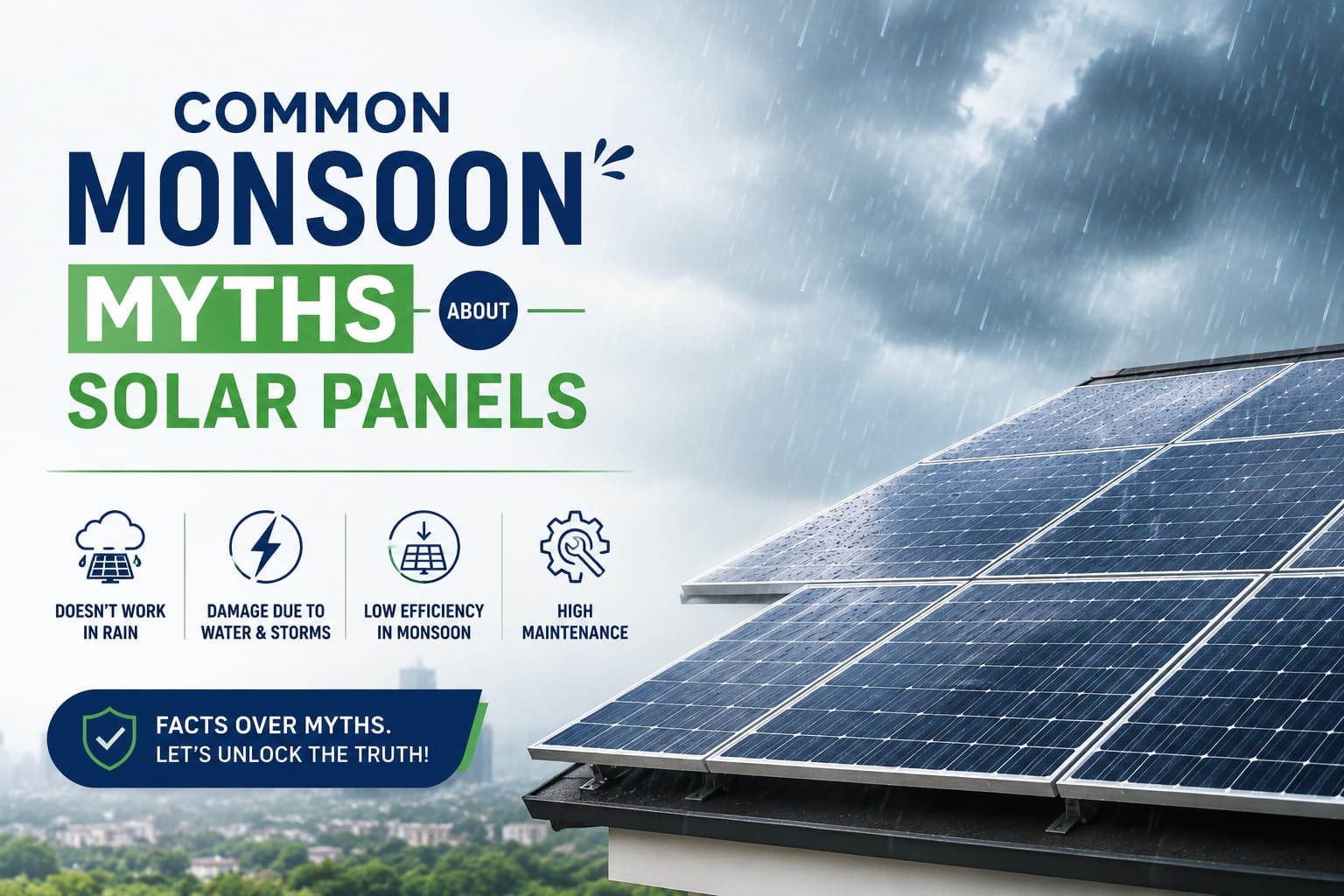
The arrival of the monsoon brings much-needed relief from the summer heat, but it also raises several questions among homeowners considering rooftop solar. One of the most common concerns is whether solar panels perform well during the rainy season.
Over the years, many misconceptions have emerged about solar panels and monsoon weather. While it’s true that heavy cloud cover can temporarily reduce electricity generation, modern solar systems are designed to perform efficiently throughout the year—including during the rainy season.
Let’s separate fact from fiction by exploring some of the most common monsoon myths about solar panels.
Myth 1: Solar Panels Don’t Work During Rainy Days
Fact: Solar panels generate electricity from sunlight, not heat.
Even on cloudy or rainy days, sunlight still reaches the earth. Although power generation may be lower than on bright sunny days, solar panels continue producing electricity.
Modern high-efficiency solar panels are designed to capture available sunlight even under diffused light conditions.
Myth 2: Monsoon Weather Damages Solar Panels Easily
Fact: Quality solar panels are built to withstand harsh weather conditions.
Certified solar panels undergo rigorous testing to ensure they can handle:
- Heavy rainfall
- Strong winds
- High humidity
- Temperature fluctuations
- Hail (within certified limits)
When installed by experienced professionals using high-quality mounting structures, rooftop solar systems are designed to perform safely during the monsoon season.
Myth 3: Rain Completely Stops Solar Power Generation
Fact: Rain may temporarily reduce output, but it does not stop electricity generation altogether.
Cloud cover affects the amount of sunlight available, which naturally reduces energy production. However, unless conditions are extremely dark, your solar panels will continue generating power throughout the day.
Over the course of a year, the high electricity generation during sunny months helps balance the reduced output during the monsoon.
Myth 4: Solar Panels Need Constant Cleaning During Monsoon
Fact: Rain actually helps clean the panels.
Rainwater naturally washes away much of the dust and dirt accumulated on the panel surface.
However, after the rainy season, it is still a good idea to inspect the panels for:
- Bird droppings
- Leaves
- Mud deposits
- Debris
Regular inspections ensure the system continues performing efficiently.
Myth 5: Water Can Enter the Solar Panels
Fact: High-quality solar panels are designed to resist water ingress.
Solar panels are manufactured with protective glass, durable frames, and sealed electrical components that are designed for outdoor use.
When installed correctly, rainwater does not enter the panels or affect their internal components.
Myth 6: Solar Panels Become Unsafe During Rain
Fact: Professionally installed solar systems are designed with safety in mind.
A properly installed rooftop solar system includes:
- Weather-resistant wiring
- Secure mounting structures
- Proper earthing
- Electrical protection devices
- Certified components
These safety measures help ensure reliable operation during all seasons, including the monsoon.
Myth 7: Monsoon Means Solar Is Not Worth the Investment
Fact: Solar systems are designed to perform throughout the year—not just during summer.
When evaluating solar performance, it’s important to consider annual electricity generation rather than just one season.
India enjoys abundant sunshine for most of the year, allowing rooftop solar systems to generate substantial electricity and long-term savings despite seasonal variations.
Tips to Keep Your Solar System Performing Well During Monsoon
To maximize your system’s performance during the rainy season:
- Inspect the panels for leaves or debris.
- Ensure nearby trees are trimmed to minimize shading.
- Monitor your system’s performance through the inverter or mobile app.
- Check that rainwater drains properly from your rooftop.
- Schedule a professional inspection if you notice unusual drops in electricity generation.
These simple steps help maintain your system’s efficiency and reliability.
Why You Shouldn’t Delay Going Solar
Many homeowners postpone installing solar because they believe they should wait until after the monsoon. In reality, solar systems are designed to operate year-round, and installation can be carried out in most weather conditions with proper planning.
Delaying your installation means delaying the savings on your electricity bills. The sooner your system is installed, the sooner you begin generating clean energy and reducing your dependence on conventional electricity.
Trust Solar Fusion for Reliable Rooftop Solar Solutions
At Solar Fusion, we provide high-quality rooftop solar systems designed to perform efficiently in every season. From expert site assessment and professional installation to after-sales support and maintenance guidance, our experienced team ensures you get the maximum benefit from your solar investment.
Rain or shine, we’re here to help you harness the power of the sun with confidence.
📞 Contact Us
Start your solar journey today with expert guidance.
📞 Contact: +91 940-389-1609
🌐 Website: www.solarfusion.in
📧 Email: [email protected]
Director: Mr. Gavish Jaiswal
📲 Stay Connected
Facebook: facebook.com/solarfusionind
Instagram: instagram.com/solar_fusion75